
- Up to 3×the tensile strength of conventional galvanised chain link (Q-Knot in Alpha and Zeta Nova)
- About ½the posts of conventional galvanised chain link
- About 40%faster to install than chain link
Technology
Q-Knot fixed knot fence: a high tensile knotted fence whose knot cannot slip
Q-Knot is SIMO Securon's fixed knot (knotted) fence: high tensile wire locked at every crossing, with posts 5 to 6 metres apart. A separate wire is wrapped around every crossing of line and stay wire, so the knot cannot slip, and the deep-crimped line wires spring back after an impact. It keeps nilgai, wild boar, deer and cattle out.


- Rated life
- 10 to 35+ years
- Tensile, Alpha and Zeta Nova
- 1150 to 1300 MPa
- Tensile, Pi
- 850 to 900 MPa
- Post spacing
- 5 to 6 m
- ISO 9001, 14001 and 45001 certified (Royal Assessments)
- Tested at NABL-accredited laboratories
- Made in Nagpur since 2023
- Installation anywhere in India
Build your order
Choose your Q-Knot fence
Pick the grid, height and roll, tell us how much fence you need, and add the matching posts and fittings. Send the list on WhatsApp; our team replies with your price and delivery. Nothing is charged online.
SIMO Securon Alpha, Q-Knot
How to buy
About 7 days for standard rolls and 30 to 45 days for custom projects, from order confirmation.
How does a Q-Knot fixed knot fence work?
A separate wire is wrapped round every crossing, so the knot cannot slip, and the deep-crimped line wires spring back after an impact.
Which Q-Knot fixed knot fence for which animal?
Height stops nilgai and cattle, and tight wires at ground level stop wild boar. Every farm design uses the graduated grid.
Nilgai and cattle
At least 6 ft (1.8 m), in Zeta Nova or Alpha.
Wild boar and smaller animals
5 to 6 ft, wires tight at ground level. Pi suits; Zeta Nova or Alpha for a longer rated life.
Forest, wildlife and zoo boundaries
8 ft (2.4 m), in Alpha or Zeta Nova, on posts made to design for orders of 2 km and above.
Installing a Q-Knot fixed knot fence in three steps
- Set the postsRust-free posts every 5 to 6 m, with every terminal and corner post braced in concrete.
- Let the concrete cureTension the fence only once the concrete has cured.
- Fix and tensionFix the fabric with QvikFixrr clips and fabric locks: a fence is only as strong as its weakest connection.
For most sites SIMO Securon recommends supply and install by its trained crews. Step by step: the fence installation guide.
Your price depends on the length, height, ground, posts, toppings and who installs it.
Q-Knot fixed knot fence drawing and specification
How do you specify a fixed knot fence?
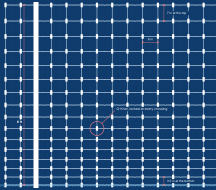
A fixed knot fence specification should state the height and number of line wires, the line wire spacing (graduated or uniform) and stay spacing, the wire diameters and tensile strength in MPa, the coating type and mass in GSM with its salt spray hours, the knot wire, the post spacing and the roll length. The figures that apply across Q-Knot are below; the full figures for each grade are in the Alpha specification, the Zeta Nova specification and the Pi specification.
Full specification9 items
| Specification | Q-Knot |
|---|---|
| Knot | Fixed knot: a separate length of wire wrapped around each crossing of stay and line wire |
| Line wires | Deep-crimped between stays, for spring-action recovery after impact |
| Grades | Alpha, Zeta Nova and Pi |
| Tensile strength | 1150 to 1300 MPa in Alpha and Zeta Nova; 850 to 900 MPa in Pi |
| Rated life (C1 to C3, ISO 9223) | 35+ years for Alpha; 20 years for Zeta Nova; 10 years for Pi |
| Graduated grid | Alpha and Zeta Nova at 6 ft: 16 horizontal wires from 88.9 mm (3.5 in) at the bottom to 177.8 mm (7 in) at the top, a stay every 152.4 mm (6 in), to 1,803 mm |
| Uniform grid | Not a catalogue grid: made only where a project drawing specifies it, with the geometry taken from that drawing |
| Post spacing | 5 to 6 m for Alpha; 5 m for Zeta Nova and Pi |
| Roll lengths | 50 m for Alpha; 30 m for Zeta Nova; 100 ft (30.5 m) for Pi |
More about Q-Knot fixed knot fence
What is Q-Knot used for?
Q-Knot keeps animals out: nilgai, wild boar, deer and stray cattle. If the threat is people climbing or cutting in, see ZS-Knot™ (Anti Climb).
- Farms and plantations losing crops to animals. See farm fencing.
- Solar parks, where the fence must last across long perimeters. See solar plant fencing.
- Highway, railway and utility corridors: suitable for corridor fencing, built to your tender specification and drawing. See highway and railway fencing.
- Plots, estates, forests and wildlife boundaries. See plot and farmhouse fencing and forest and wildlife fencing.
How does a fixed knot fence work?
A fixed knot fence locks every crossing of a vertical and a horizontal wire with a separate wrapped wire, so the wires cannot slide along each other. A Q-Knot crossing is a true fixed knot, not a woven or hinged joint, so the grid keeps its shape under pressure.
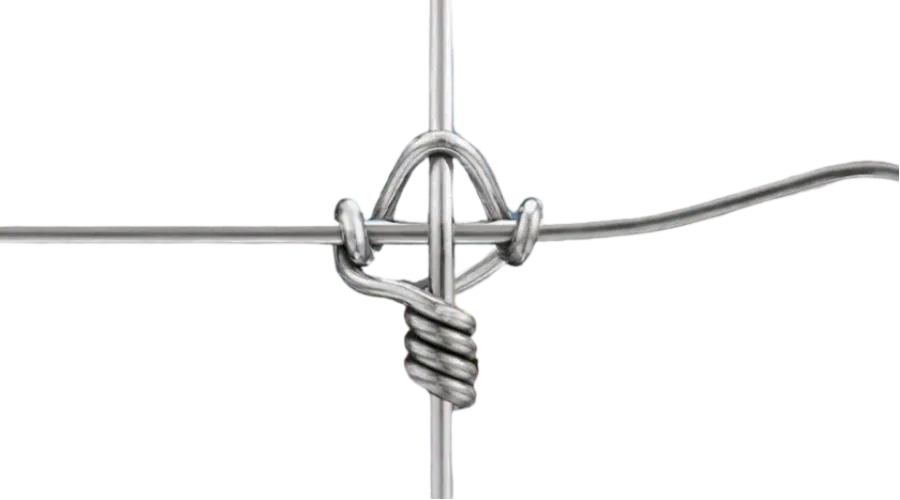
- Stay wire: the vertical wire that sets the grid and carries the knot
- Deep-crimped line wire: acts as a spring, keeps the fence tight and lets it recover after impact
- Fixed knot: formed from a separate length of wire, so it cannot slip

- The knot cannot slip. It is formed from a separate length of wire wrapped around each crossing, not woven or hinged, so the grid keeps its shape under pressure.
- The line wires act as springs. Each horizontal wire is deep-crimped between the stays, so the fence absorbs an animal or vehicle impact and returns to shape rather than deforming.
- The fabric carries its own tension. That rigidity is what lets posts stand 5 to 6 m apart instead of 2.5 to 3 m.
Is a fixed knot fence the same as a deer fence?
Abroad, a fixed knot fence is sold as deer, game, cattle and horse fence, by the animal it keeps in or out. In India the same kind of fence is usually called a fixed knot fence or a knotted fence. SIMO Securon’s is the Q-Knot: a graduated grid, closest at the bottom, at 5, 6 or 8 ft. For deer on a farm, see how to protect crops from nilgai and wild boar.
Fixed knot fence or chain link: what is the difference?
A fixed knot fence has a locked knot at every crossing and high-tensile wire; conventional galvanised chain link (jali) is a woven diamond of lower-tensile wire that is easier to cut and climb.
| Q-Knot fixed knot fence | Conventional galvanised chain link | |
|---|---|---|
| Joint | Fixed knot at every crossing; cannot slip | Woven diamond; joints weaken over time |
| Wire tensile strength | 1150 to 1300 MPa (Alpha, Zeta Nova); 850 to 900 MPa (Pi) | 400 to 550 MPa |
| Coating | Zn-Al 90/10, 240 GSM minimum (Alpha); Zn-Al 90/10, 120 GSM (Zeta Nova); Zinc, 80 to 100 GSM, with topcoat (Pi) | Standard galvanised, 40 to 60 GSM |
| Post spacing | 5 to 6 m | 2.5 to 3 m |
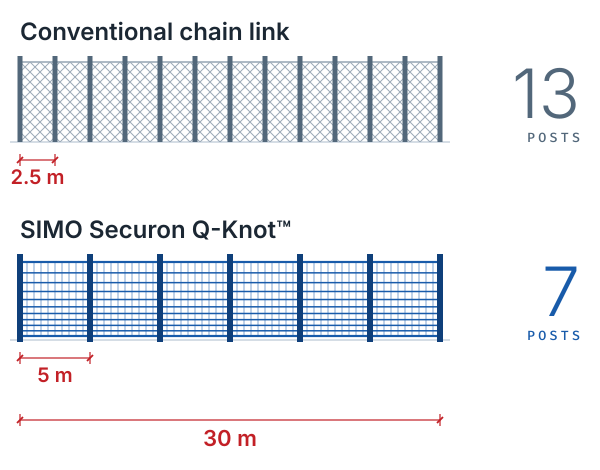
| Posts on a 30 m run | 7, at 5 m | 13, at 2.5 m |
| Life | Rated 10 to 35+ years by grade | 2 to 5 years |
| Installation | About 40 percent faster | Standard |
Chain link costs less upfront and suits temporary or low-cost boundaries; SIMO Securon supplies it too, made to order as QvikFixrr chain link. For the full comparison, read knotted fence vs chain link.
Which Q-Knot fence for which animal?
Height stops nilgai and cattle, and tight wires at ground level stop wild boar. SIMO Securon suggests:
| Animal or site | Height | Grade |
|---|---|---|
| Nilgai (blue bull) and cattle | At least 6 ft (1.8 m) | Zeta Nova or Alpha |
| Wild boar (jungli suar) and smaller animals | 5 to 6 ft, with the wires tight at ground level | Pi suits; Zeta Nova (5 or 6 ft) or Alpha (6 ft) for a longer rated life |
| Forest, wildlife and zoo boundaries | 8 ft (2.4 m) | Alpha or Zeta Nova, on posts made to design for orders of 2 km and above |
Every farm design uses the Q-Knot graduated grid. These are starting points for discussion, not for construction: every job is built to the drawing agreed for it. Read more in how to protect crops from nilgai and wild boar and, for cattle, the cattle fencing guide.
Graduated fixed knot fence or uniform grid: which do you need?
Choose the graduated grid: it is the catalogue grid, with the wires closest together at the bottom, where animals push and small animals try to get through, and further apart at the top, where the load is lower.
| Grid | How the wires are spaced | Used for |
|---|---|---|
| Graduated | Closest at the bottom and widest at the top: 3.5 to 7 inches in Alpha and Zeta Nova, a stay every 6 inches | Farms and most animal boundaries: more protection where animals push, less steel where the load is low |
| Uniform | Equal spacing, taken from the project drawing | Only where a project drawing specifies it. Not a catalogue grid |

Which grades is Q-Knot made in, and how long do they last?
Q-Knot is made in all three SIMO Securon grades: Alpha, rated for 35 years or more; Zeta Nova, rated for 20 years; and Pi, the affordable grade, rated for 10 years. The grade sets the coating, and so the rated life, and the strength of the wire.
| Specification | Alpha | Zeta Nova | Pi |
|---|---|---|---|
| Rated life | 35+ years | 20 years | 10 years |
| Coating | Zn-Al 90/10, 240 GSM minimum | Zn-Al 90/10, 120 GSM | Zinc, 80 to 100 GSM, with topcoat |
| Tensile strength (Q-Knot) | 1150 to 1300 MPa | 1150 to 1300 MPa | 850 to 900 MPa |
| Salt spray | 2,000 hours without red rust (tested) | 1,200 hours without red rust (tested) | About 200 hours to red rust (estimated from the coating specification) |
| Standard heights | 6 ft | 5 ft and 6 ft | 5 ft and 6 ft |
| Post spacing | 5 to 6 m | 5 m | 5 m |
| Roll length (Q-Knot) | 50 m | 30 m | 100 ft (30.5 m) |
Why does a Q-Knot fence need around half the posts of chain link?
Because the knots cannot slip and the crimped high-tensile line wires hold their own tension, Q-Knot posts stand 5 to 6 m apart, against 2.5 to 3 metres for conventional galvanised chain link. On a 30 m run at 5 metres that is 7 posts instead of 13, and installation runs about 40 percent faster.
The fencing cost estimator works out the posts and rolls for your boundary.
How is a Q-Knot fence installed?
A Q-Knot fence is only as strong as its weakest connection. Fix it with QvikFixrr clips and fabric locks to posts that are free of rust, brace every terminal and corner post in concrete, and tension it only once the concrete has cured. Post sizes and foundation depths are on the fence posts and fittings page. For most sites SIMO Securon recommends supply and install by its trained crews.
Request a grade datasheet
Request a grade datasheet
Q-Knot is specified in full in the Alpha, Zeta Nova and Pi datasheets, each on its grade page, and the Q-Knot brochure is below. Tell us which datasheet you need for your file and we will email it.
Thank you. We have your request.
Your reference:
What happens next
- We email the datasheet to the address you gave.
- If you have a project in mind, we call to ask about it.
FAQ
Questions about Q-Knot fixed knot fence
Is Q-Knot a knotted fence?
Yes: Q-Knot is SIMO Securon's high tensile fixed knot fence, a knotted fence with a separate wrapped wire at every crossing, so the knot cannot slip as a woven or hinged joint can. Its wire is 1150 to 1300 MPa in Alpha and Zeta Nova and 850 to 900 MPa in Pi, against 400 to 550 MPa for conventional galvanised chain link. SIMO Securon's other knotted fence, ZS-Knot (Anti Climb), is for keeping people out.
Knotted fence grades and specificationsWhat heights does a Q-Knot fence come in?
SIMO Securon makes Q-Knot at 5 ft (1.5 m) in Zeta Nova and Pi, at 6 ft (1.8 m) in all three grades, and to order up to 8 ft (2.4 m) in Alpha and Zeta Nova. A 6 ft fence has 16 line wires; Zeta Nova is also made with 20. A fence against nilgai must be at least 6 ft.
Can a Q-Knot fence keep people out?
Q-Knot is built to keep animals out. Where the threat is a person climbing or cutting in, SIMO Securon suggests ZS-Knot (Anti Climb) on the 4 x 2 inch grid, with RTHT barbed wire and concertina coil on top.
ZS-Knot (Anti Climb) fenceHow much does a fixed knot fence cost?
The price of a fixed knot fence depends on the grade, height, length, posts, toppings and who installs it, so SIMO Securon prices each fence for its site. The quantities are predictable: at a 5 metre post gap a straight kilometre takes 201 posts, against 401 for conventional galvanised chain link at 2.5 metres. Send your boundary on WhatsApp for your exact price.
Fencing cost in IndiaWhat is the post spacing for a fixed knot fence?
A SIMO Securon Q-Knot fixed knot fence has a post every 5 to 6 m in Alpha and 5 m in Zeta Nova and Pi, about 16 to 20 feet, against 2.5 to 3 metres for conventional galvanised chain link. The knot that cannot slip and the crimped line wires hold the fence's tension between the posts.
Where can I buy a fixed knot fence?
Buy SIMO Securon Q-Knot directly from SIMO Securon, on supply only, supply and install or turnkey EPC terms, or from an authorised SIMO Securon dealer. Call or WhatsApp +91 93730 08466 with your PIN code and the team tells you the quickest way to buy for your site.
Become a dealerWho makes Q-Knot fencing?
SIMO Securon makes Q-Knot fencing at MIDC Butibori, Nagpur. SIMO Securon is the perimeter security and knotted fencing division of SIMO WiroTEK Private Limited (formerly SIMO Screens Private Limited), Nagpur, Maharashtra, India, and India's first manufacturer of Q-Knot and ZS-Knot (Anti Climb) fencing with Zn-Al coating. SIMO has supplied both Q-Knot and ZS-Knot to companies listed on an Indian stock exchange.
Company factsFence your site with Q-Knot
Tell us your site type, the animals you face, the boundary length and your PIN code. We will suggest the grade, grid and height, and send your price on WhatsApp.