
- Up to 3×the tensile strength of conventional galvanised chain link (Q-Knot in Alpha and Zeta Nova)
- About ½the posts of conventional galvanised chain link
- About 40%faster to install than chain link
Fixed knot fence manufacturer in India
A fixed knot fence, also called a knotted fence, is a high tensile fence locked at every crossing by a separate small wire, so it does not slip. SIMO Securon, a fixed knot fence manufacturer in Nagpur, makes the Q-Knot™ fixed knot fence for animals and the ZS-Knot™ 4 x 2 inch anti-climb knotted fence for people, in three grades.
- ISO 9001, 14001 and 45001 certified (Royal Assessments)
- Tested at NABL-accredited laboratories
- Made in Nagpur since 2023
- Installation anywhere in India
How does a fixed knot fence work?
A separate short length of wire locks every crossing, so it cannot slip, and the crimped line wires act as springs. The fence takes a push, returns to shape and stays rigid enough to span 5 to 6 metres between posts.
What do you get with a fixed knot fence?
Stronger wire
Up to three times chain link (Q-Knot in Alpha and Zeta Nova).
Long rated life
10 to 35+ years of rated life, by grade.
Around half the posts
Posts 5 to 6 m apart; chain link 2.5 to 3 m.
About 40 percent faster to install
Less digging, less concrete, less time on site.
Minimal maintenance
No rust treatment or re-tensioning every 2 to 3 years.
Takes a hit, springs back
Crimped line wires recover after an impact.
Anti-climb when you need it
ZS-Knot 4 x 2 inch grid: no toe or finger hold.
More cost effective over its life
Against chain link, without the replacement cycle.
Q-Knot or ZS-Knot: which fixed knot fence do you need?


Chain link, a knotted fence or a wall?
Conventional chain link: woven diamond mesh on posts every 2.5 metres. Conventional chain link
- Lowest cost at the start.
- Replaced within a few years.
- Posts 2.5 to 3 m apart.
SIMO Securon Q-Knot knotted fence: a graduated grid with a Q-Knot at every crossing, on posts every 5 metres. SIMO Securon knotted fence
- Four to six times the coating mass of chain link (Alpha).
- Takes an impact and springs back.
- Twice as fast to install as a wall.
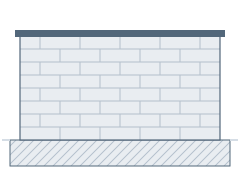
Precast or masonry wall
- Gives privacy.
- Heavy civil work and a long programme.
- The right answer where privacy or noise is the need.
How do you buy a fixed knot fence from the manufacturer?
Fence rolls, a bundle of angle posts and a delivery truck: SIMO Securon supplies the matched system and your contractor installs it. Supply only
The fence with matched QvikFixrr™ posts and fittings. Your contractor installs, and a trainer can work alongside the team.
SuitsBuyers with a trusted contractor
- Recommended
A fence bay going up between a braced terminal post and an intermediate post 5 metres apart, with a fence tensioner and a hard hat: SIMO Securon supplies everything and its trained crews install it. Supply and install
SIMO Securon supplies everything and its trained crews install it, anywhere in India. One contract, one point of responsibility.
SuitsMost sites
A perimeter drawing, a survey instrument and a handover checklist: SIMO Securon runs the site survey, engineering design, supply, installation, inspection and handover. Turnkey EPC
Site survey, design to agreed drawings, supply, installation, inspection and handover with documentation.
SuitsSolar, infrastructure and large industrial projects
How is a fixed knot fence priced?
A fixed knot fence is priced along the boundary, in running metres or running feet, not over the area. The quantities are predictable: a square acre is about 255 metres around and takes about 51 posts at a 5 metre gap, against about 102 for conventional galvanised chain link at 2.5 metres. On a 30 metre run, that is 7 posts against 13.
What sets the price of your fence
- the boundary length, and its corners and gates
- the height and the grade (Alpha, Zeta Nova or Pi)
- the ground, and the posts and foundations it needs
- toppings: RTHT™ barbed wire or concertina coil
- supply only, or supplied and installed by SIMO’s crews
Send these to the team and your exact price comes back on WhatsApp or by phone.
The method, unit by unit (per acre, per metre, per running foot and per sq ft), is in fencing cost in India.
More about fixed knot fence
What is a knotted fence?
A knotted fence is a wire mesh fence made of horizontal line wires and vertical stay wires, with a knot at every place they cross. In a fixed knot fence, the knot is a separate short length of wire wrapped round the crossing, so the line wire and the stay are locked together and cannot slide. That is what makes it different from the other wire fences buyers compare:
- Chain link (jali) is a woven diamond mesh with no knots. It needs a post every 2.5 to 3 metres and is easier to cut and climb.
- Barbed wire (kantedar taar) is a few separate strands with open gaps between them.
- A hinge joint fence is an older knotted design whose stays are cut between the line wires and wrapped round them, so the joint can fold. See fixed knot vs hinge joint.
SIMO Securon makes two fixed knot fences: the Q-Knot fixed knot fence, which keeps animals out, and the ZS-Knot anti-climb knotted fence on its 4 x 2 inch grid, which keeps people out. All the names buyers use for these fences, in India and abroad, are in the types of fence glossary.
How do the knot and the crimp work?
The Q-Knot has three parts, drawn at the top of this page:
- Stay wire: the vertical wire that sets the grid and carries the knot.
- Deep-crimped line wire: acts as a spring, keeps the fence tight and lets it recover after impact.
- Q-Knot: the knot itself, formed from a separate length of wire, so it cannot slip.
How they work together:
- The knot. In the Q-Knot, a separate length of wire is wrapped round each crossing of a vertical stay and a horizontal line wire, so every crossing is locked. The ZS-Knot is wrapped above and below the line wire, and its 4 x 2 inch grid is too narrow for a toe or finger hold.
- The crimp. The line wires are crimped between the stays. The crimps act as springs: the fence takes an animal’s push or a vehicle’s knock and returns to shape.
- The result. Because the knots cannot slip, the fence stays rigid enough to span 5 to 6 metres between posts, against 2.5 to 3 metres for conventional galvanised chain link. That means around half the posts, less digging and concrete, and installation about 40 percent faster.
What exactly do you get with a fixed knot fence?
- Stronger wire. Q-Knot wire of 1150 to 1300 MPa in Alpha and Zeta Nova, up to three times the 400 to 550 MPa of conventional galvanised chain link. Q-Knot in Pi is 850 to 900 MPa; ZS-Knot wire is 700 to 800 MPa.
- Long rated life. 10 to 35+ years of rated life by grade, from zinc and zinc-aluminium coatings; Alpha carries 240 GSM minimum.
- Around half the posts. Posts stand 5 to 6 m apart, against 2.5 to 3 m for conventional galvanised chain link.
- About 40 percent faster to install. Fewer posts than conventional galvanised chain link means less digging, less concrete and less time on site.
- Minimal maintenance. No rust treatment, re-tensioning or post realignment every 2 to 3 years, as conventional chain link needs. Walk the line after storms or impacts.
- Takes a hit, springs back. Crimped line wires recover after an animal or vehicle impact, and hold animals without injuring them.
- Anti-climb when you need it. ZS-Knot 4 x 2 inch apertures leave no toe or finger hold.
- More cost effective over its life. Up to 10 percent with Alpha, 10 to 20 percent with Zeta Nova and up to 30 percent with Pi, against conventional galvanised chain link, without the replacement cycle.
What heights and grids does a fixed knot fence come in?
| Fence | Grid | Heights | Rolls |
|---|---|---|---|
| Q-Knot, Alpha | Graduated: line wires 3.5 in apart at the bottom to 7 in at the top, a stay every 6 in | 6 ft standard; 8 ft made to order | 50 m |
| Q-Knot, Zeta Nova | Graduated, as above | 5 ft and 6 ft standard; 8 ft made to order | 30 m |
| Q-Knot, Pi | Graduated, as above | 5 ft and 6 ft | 100 ft (30.5 m) |
| ZS-Knot, Alpha or Zeta Nova | 4 x 2 inch, anti-climb | 6 ft and 8 ft | 50 m |
| ZS-Knot, Alpha or Zeta Nova | 4 x 4 inch | 6 ft and 8 ft | 50 m |
| ZS-Knot, Alpha or Zeta Nova | 3 x 3 inch | 6 ft | 50 m |
The graduated grid puts the wires closest together at the bottom, where wild boar and small animals push, and further apart at the top, where the load is lower. Only the 4 x 2 inch ZS-Knot grid is an anti-climb fence.

Which grade and coating should you choose?
The grade is the coating, and the coating sets how long the fence is designed to last. The Q-Knot comes in all three grades; the ZS-Knot in Alpha and Zeta Nova, with wire of 700 to 800 MPa.
| Specification | Alpha | Zeta Nova | Pi |
|---|---|---|---|
| Rated life | 35+ years | 20 years | 10 years |
| Coating | Zn-Al 90/10, 240 GSM minimum | Zn-Al 90/10, 120 GSM | Zinc, 80 to 100 GSM, with topcoat |
| Tensile strength (Q-Knot) | 1150 to 1300 MPa | 1150 to 1300 MPa | 850 to 900 MPa |
| Salt spray | 2,000 hours without red rust (tested) | 1,200 hours without red rust (tested) | About 200 hours to red rust (estimated from the coating specification) |
| Standard heights | 6 ft | 5 ft and 6 ft | 5 ft and 6 ft |
| Post spacing | 5 to 6 m | 5 m | 5 m |
How the figures are worked out is on quality and testing. Within 20 km of the coast, or on a chemically aggressive site, ask for a site-specific recommendation before you order.
Where is a fixed knot fence used?
SIMO Securon’s fixed knot fence is used on farms, solar plants, factories and data centres, forests and wildlife reserves, plots and farmhouses, and highway and railway corridors: see farm fencing, solar plant fencing, industrial and data centre fencing, forest and wildlife fencing, plot boundary fencing and highway and railway fencing.
Where else can you buy a fixed knot fence?
- Near you: buy direct, or from an authorised partner: see where to buy fencing.
- Installed for you: see fencing contractor.
- Outside India: see fixed knot fence for export.
- Comparing makers: see how to compare knotted fence brands.
Why buy from the maker in Nagpur?
- ISO 9001, 14001 and 45001
SIMO WiroTEK's systems are certified to all three.
Read more about ISO 9001, 14001 and 45001 - NABL-accredited testing
Wire strength, coating mass and salt spray are tested at NABL-accredited laboratories.
Read more about NABL-accredited testing - Private sector clients
Megha Engineering (supply exceeding 100 km), CleanMax, ENGIE, Solar Defence and Aerospace, and railway contractors.
Read more about Private sector clients
FAQ
Fixed knot fence questions
What is a fixed knot fence?
A fixed knot fence is a woven wire fence in which a separate short length of wire is wrapped round every crossing of a vertical stay and a horizontal line wire, so the crossing is locked and cannot slip. It is also called a knotted fence. SIMO Securon's is the Q-Knot fixed knot fence.
How far apart are the posts on a fixed knot fence?
SIMO Securon's fixed knot fence takes a post every 5 to 6 metres in Alpha and every 5 metres in Zeta Nova and Pi, against 2.5 to 3 metres for conventional galvanised chain link. On a 30 metre run that is 7 posts at 5 metres, against 13 at 2.5 metres.
Fixed knot fence installationWhat is the price of a fixed knot fence?
It depends on the boundary length, the height, the grade, the ground and posts, the gates, any toppings, and whether SIMO's crews install it. Send these on WhatsApp, or use the fencing cost estimator, which works out the posts and rolls for your site, and the team sends your price.
Fencing cost in IndiaIs a fixed knot fence the same as a deer fence?
Often, yes: abroad, fixed knot fence is sold as deer fence, game fence, cattle fence and horse fence, by what it keeps in or out. In India the same fence is used on farms against nilgai (blue bull) and wild boar, and on forest and wildlife boundaries at 8 ft.
Types of fenceWho makes fixed knot fence in India?
SIMO Securon makes fixed knot fence at its works in MIDC Butibori, Nagpur. It is India's first manufacturer of Q-Knot and ZS-Knot (Anti Climb) fencing with zinc-aluminium (Zn-Al) coating, and its fence is tested at NABL-accredited laboratories.
Can I buy a fixed knot fence near me?
Yes: buy direct from SIMO Securon, which delivers across India, or from an authorised SIMO Securon dealer. Send your PIN code on WhatsApp to +91 93730 08466 and the team tells you the nearest way to buy.
Where to buy fencingGet a fixed knot fence for your site
Tell us your site type, location, boundary length and what the fence must keep out. We suggest the fence, grade and height, and send your price on WhatsApp.